Watercolor Funny Cats on Fence Clipart Review
I have spent years reviewing digital embroidery assets for my own boutique and for clients who need reliable designs for their craft business. When I first encountered the Watercolor Funny Cats on Fence Clipart, I knew immediately that this was not just another generic clip art file. It had a specific personality that could elevate a simple project into a standout piece of custom apparel. As an experienced designer, I do not just look at how a design looks on a screen; I analyze how it translates to thread, fabric texture, and the final stitched product.
The immediate mood created by these illustrations is one of whimsy and warmth. The watercolor aesthetic softens the lines, which is crucial when translating digital graphics into a physical embroidery project. Unlike sharp vector lines that can sometimes look too rigid in stitching, the watercolor style suggests a softer edge that often works beautifully with satin stitch or fill stitch techniques. This makes it a perfect candidate for personalized gifts where emotional connection matters as much as technical precision.
From Screen to Stitch: A Real-World Scenario
To truly understand the potential of Watercolor Funny Cats on Fence Clipart, let me walk you through a real scenario I recently considered for a client order. Imagine a small shop owner preparing a line of holiday gifts. They want to create a custom embroidered tote bag featuring a playful cat theme. The goal is to make something that feels handmade but has a high-end, artistic finish.
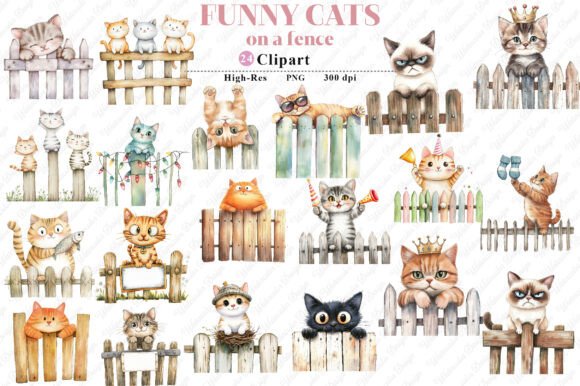
If I were to use this design asset for a tote bag design, the first thing I would evaluate is the layout. The clipart features cats perched on a fence, which provides a natural horizontal composition. This is ideal for placement on the front pocket of a sweatshirt or centered on a kitchen towel. However, because the original files are provided as 300 dpi PNGs with transparent backgrounds, the challenge lies in converting those raster images into a true machine embroidery design. If the conversion is done poorly, the delicate watercolor gradients can turn into muddy blobs of thread.
In a practical setting, I would test this design on a scrap piece of light-colored cotton twill first. The transparency of the background allows for easy placement on various colors, but the contrast between the thread colors and the fabric is vital. For a baby item, like a onesie or a blanket, the soft pastel tones implied by the watercolor style would be charming. But for a dark fabric, the thread density needs to be high enough to prevent the fabric from showing through. This is where many designers fail; they assume the digital preview is the final result. In reality, embroidery files require careful color selection to maintain the integrity of the original illustration.
Where This Design Shines
Watercolor Funny Cats on Fence Clipart excels in projects that benefit from a storybook feel. It is particularly effective for embroidered patches that will be sewn onto denim jackets or backpacks. The fence element provides a natural border, which can help frame the design if you add a satin stitch outline around the perimeter. This adds durability and prevents fraying, a common issue with detailed graphics used in commercial embroidery.
For Etsy sellers and small shop products, this design offers a unique selling point. Many shops sell generic cat designs, but few offer the artistic flair of a watercolor style rendered in thread. If you are creating a series of holiday embroidery items, such as Christmas stockings or aprons, these cats can serve as a focal point. The whimsical nature of the subject matter appeals to a wide demographic, from children to adults who appreciate cute decor.
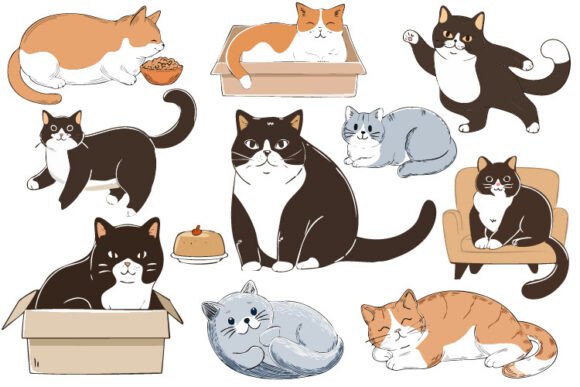
Furthermore, the versatility of the 24 included PNG files means you can create a cohesive collection. You might use different variations for a set of matching pillow covers, tea towels, and even printed mockups for your online store. Having multiple angles or poses allows you to mix and match without looking repetitive. This variety is essential for maintaining customer engagement and keeping your brand fresh.
Caution Areas and Technical Challenges
While the artistic appeal is high, there are specific areas where caution is required. One of the biggest pitfalls involves small hoop sizes. Watercolor details rely on subtle shifts in tone. If you attempt to stitch this design in a very small hoop, say under 4 inches, the fine details of the fence slats or the fur texture may get lost or become distorted. The thread width itself takes up space, so what looks distinct on a screen might merge together on fabric.
Textured fabrics also present a challenge. If you choose a heavy linen or a fuzzy fleece, the definition of the watercolor edges can be compromised. The stabilizer choice becomes critical here. Without proper support, the tension might pull the fabric, warping the fence line and ruining the perspective. Always confirm whether you need a cut-away stabilizer for stability or a tear-away for lighter applications.
Another consideration is the application on curved surfaces like caps. While possible, the curvature can stretch the design, making the cats look slightly elongated or compressed. For sweatshirt embroidery, the flat surface is generally more forgiving, but the stretch of the knit fabric must be accounted for during digitizing. If the design is not properly adjusted for fabric stretch, the finished product may look misshapen after washing.
Dense stitch areas are also a risk. If the original artwork contains large blocks of solid color intended to be filled with thread, the resulting texture might be too stiff for comfortable wear on baby clothes or delicate garments. In such cases, using a combination of running stitch and satin stitch can mimic the watercolor effect while keeping the fabric flexible.
Professional Designer Notes for Success
Before committing to a full production run, I strongly advise testing the design on scrap fabric. Check the thread color contrast against your chosen material. Does the black outline pop? Do the pastel colors blend well? Reviewing the stitch density is non-negotiable; too much thread can cause puckering, while too little can leave gaps in the image.
Inspect the small details closely. Are the tiny paws or whiskers clear? If the design relies on extremely thin lines, consider simplifying them slightly to ensure they hold up over time, especially for products that need frequent washing. Test the design in black and white mockups to see if the value contrast remains strong without relying on color alone.
It is also vital to compare how the design looks on both light and dark fabric backgrounds. Sometimes a design that looks perfect on white fails miserably on navy blue due to insufficient coverage. Ensure you have the correct thread colors to replicate the watercolor effect. Finally, confirm licensing terms before selling finished items. Even though these are digital embroidery files, commercial usage rights vary, and you must ensure you are allowed to sell products made with Watercolor Funny Cats on Fence Clipart.
In conclusion, this collection offers a delightful opportunity for creative entrepreneurs to produce high-quality, emotionally resonant products. By paying attention to the technical nuances of stitch density, hoop size, and fabric selection, you can transform these digital illustrations into stunning physical treasures. Whether for a personal gift or a new line of boutique branding, the key is to respect the medium of embroidery while celebrating the charm of the original artwork.